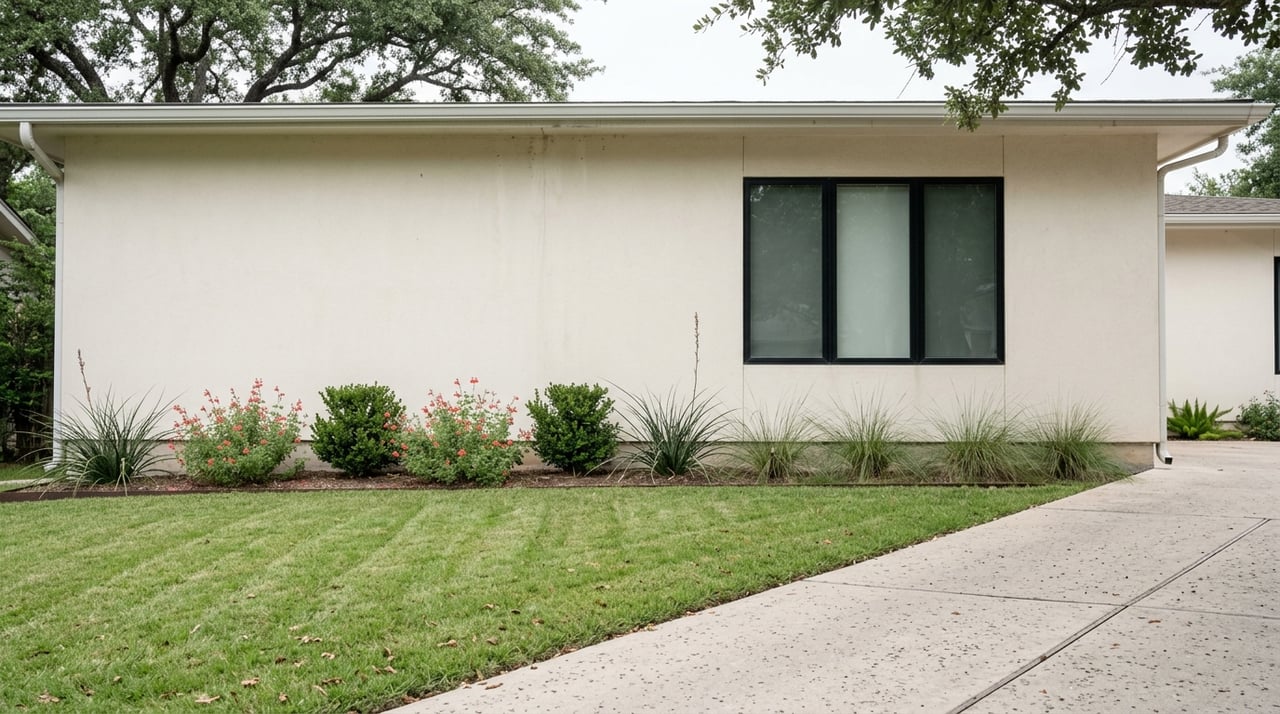
Picture two new-construction homes in Liberty Hill, both listed at $525,000, both four bedrooms, both a short drive from the same H-E-B. A buyer comparing them side by side would reasonably assume the tax line on the closing statement looks about the same too. It often doesn't. Depending on which specific pocket of the city each home sits in, the annual property tax bill on those two houses can differ by several thousand dollars, and the gap has nothing to do with square footage, lot size, or finish level. It can come down to the taxing entities and district assessments tied to each address.
That distinction matters more in Liberty Hill than in most Austin-area suburbs, because so much of the city's recent growth has been financed through Municipal Utility Districts and Public Improvement Districts rather than through the city's general tax rate. If you're comparing neighborhoods here, the number worth understanding isn't the one that makes headlines. It's the one buried in a document you may not see until you're already under contract.
The Rate You Read About Isn't the Rate You Pay
Liberty Hill City Council adopted a property tax rate of $0.469407 per $100 of assessed value for tax year 2025, which funds the city's fiscal year 2025-26 budget. That rate matches the no-new-revenue rate, meaning it's effectively a decrease for the average homeowner even though the number itself looks unchanged year over year.
That's genuinely good news, but it's also only one line on a Liberty Hill tax bill. The city, Williamson County, and Liberty Hill ISD each set their own rates, and none of those bodies has anything to do with a MUD or PID. Municipal Utility Districts are independent governmental entities with their own elected boards, created specifically to fund water, sewer, drainage, and road infrastructure in areas that weren't already served by city systems when development began. They operate outside city government entirely and levy their own tax, on top of everything else on the bill.
What a MUD or PID Actually Does to Your Bill
The mechanism is straightforward once you see it. A developer wants to build a large master-planned community on raw land with no existing water or sewer service. Rather than the developer paying for all of that infrastructure upfront, the city or county authorizes a district, the district issues bonds, and the bonds get repaid over years through a tax assessed on the homes built inside the district's boundary. The cost of building the neighborhood gets spread across the people who eventually buy homes in it.
Liberty Hill has done this more than once. Liberty Parke was the city's first Public Improvement District, established in January 2017. Years later, the city council created a second, the Summerlyn West PID, authorizing $7.5 million in bond funding for parks, water and wastewater improvements, and street construction across roughly 95 acres. Stonewall, one of the city's higher-density communities, sits inside its own dedicated water and sewer authority, the Stonewall Ranch Municipal Utility District. These aren't abstractions. They're specific, named entities with specific boundaries, and a home either sits inside one or it doesn't.
Santa Rita Ranch says Texas law requires the seller to hand over the MUD notice before a buyer signs a contract, not at closing. If you haven't seen it by the time you're writing an offer, ask for it before you sign anything.
Same Community, Different Number
Here's where it gets genuinely counterintuitive. Buyers often assume that if they've picked their community, they've picked their tax rate. Santa Rita Ranch is the clearest example of why that's not quite true. The development spans more than 3,100 acres and includes distinct sections with different school zoning: homes in Homestead and Saddleback are zoned to Liberty Hill ISD, while homes in the Tierra Rosa section are zoned to Georgetown ISD, despite sitting inside the same overall community. A buyer who assumes every section carries the same combined tax bill is assuming something that isn't guaranteed once school district and utility district lines don't line up neatly.
Zoom out to the city as a whole and the spread is still wide. Combined tax rates across Liberty Hill's MUD and PID-backed neighborhoods, once city, county, school, and district assessments are added together, commonly land somewhere in the 2% to 2.8% range of assessed value depending on the specific subdivision, as of mid-2026. Liberty Hill's broader effective property tax rate, blending every kind of address in the city, was recently estimated at closer to 1.7%, which gives a sense of how much a MUD or PID assessment alone can add. On a $525,000 home, the difference between the 1.7% blended figure and the 2.8% high end of the MUD-backed range works out to roughly $8,925 a year versus $14,700 a year, a swing of nearly $5,800 annually on two houses that could be priced identically on the listing sheet.
| Community | District mechanic | What it signals for your bill |
|---|---|---|
| Santa Rita Ranch (Homestead, Saddleback) | Inside a MUD, zoned Liberty Hill ISD | Combined rate reflects city, county, school, and MUD layers stacked together |
| Santa Rita Ranch (Tierra Rosa) | Inside a MUD, zoned Georgetown ISD | Same overall community, different school district, worth confirming separately |
| Stonewall | Stonewall Ranch MUD | Dedicated water and sewer district tied specifically to this neighborhood |
| Areas outside any MUD or PID | City, county, and school rates only | No bond-repayment assessment layered on top |
None of this makes one option better than another. A MUD-funded neighborhood is often how a buyer gets curbs, sidewalks, and a working sewer system in a part of the county that didn't have any of it a decade ago. But it does mean the sticker price on two similar homes tells you almost nothing about what you'll actually pay every January.
Why the County Can't Just Tell You the Payoff Date
One detail catches even careful buyers off guard. MUD taxes are designed to decline once the district's bonds are repaid, and in some cases the assessment disappears entirely. That's the long-term upside of buying into a MUD. The problem is finding out where a specific district stands in that repayment timeline.
Williamson County's own Public Improvement District page states plainly that the Tax Assessor-Collector's office does not have assessment payoff information for PIDs, with one specific exception, the Cimarron Hills PID. For every other PID in the county, including the ones in Liberty Hill, that information has to come from somewhere else, typically the district itself or a title company pulling the district's most recent service and assessment plan. It's not a hidden fact so much as a fact nobody centralizes, which means the burden falls on the buyer, or the buyer's agent, to go find it.
What to Actually Ask Before You Compare Two Listings
A side-by-side comparison of two Liberty Hill homes is incomplete without answering a short list of questions, ideally before an offer goes in rather than after:
- Is this address inside a MUD, a PID, or both? A property can carry either, neither, or both at once.
- Which specific district? Liberty Hill has more than one, and they don't all carry the same rate or the same repayment schedule.
- How much bonded debt does the district still owe, and is there a projected date when the rate steps down?
- Has the seller provided the MUD notice yet? Texas law requires that one before the buyer signs a contract, which means it needs to surface during the offer stage, not after.
- If the property sits in a PID instead, has the required addendum been prepared? The City of Liberty Hill says that disclosure is typically signed at closing alongside the deed, so it shows up later in the process than the MUD notice does.
- If the district is a PID, does the assessment get paid annually with property taxes, or does the seller have the option to pay it off in a lump sum, which changes what the buyer inherits?
The Number That Actually Predicts Your Bill
The city's own tax rate matters, and its move to a no-new-revenue rate for 2025 is a real, verifiable data point in Liberty Hill's favor. But treating that number as the whole story is how two buyers end up shocked by two very different tax bills on two very similar houses. The number that actually predicts what you'll pay lives one layer deeper, in the specific MUD or PID tied to a specific address, and that number rarely shows up until someone goes looking for it.
A Few Straight Answers
Does a MUD tax ever go away? Generally, yes. MUD taxes exist to repay the bonds that funded the district's infrastructure. Once those bonds are retired, the tax tied to them typically drops or disappears, though the timeline is specific to each district and isn't guaranteed to be short.
Is the MUD notice the same thing as the seller's disclosure notice? No. They're separate documents with separate legal requirements and separate timing. The MUD notice, required under the Texas Water Code, has to reach the buyer before a contract is signed. The PID addendum, required under the Texas Property Code, is typically signed later, at closing, alongside the deed.
If you're weighing two Liberty Hill neighborhoods, or trying to figure out what a specific address actually costs to own once every taxing entity gets counted, that's exactly the kind of homework worth doing before you fall in love with a floor plan. Michael Langford works this market section by section and can walk you through what a specific MUD or PID means for a specific address before you write an offer. Let's Connect.
This article is general information, not legal, tax or financial advice. Consult a qualified professional about your situation.